Stephen M.R. Covey
Bestselling Author of The Speed of Trust and Trust & Inspire
Former CEO of the Covey Leadership Center who turned a low-trust merger into a career proving that trust is a hard-edged economic driver.
About Stephen
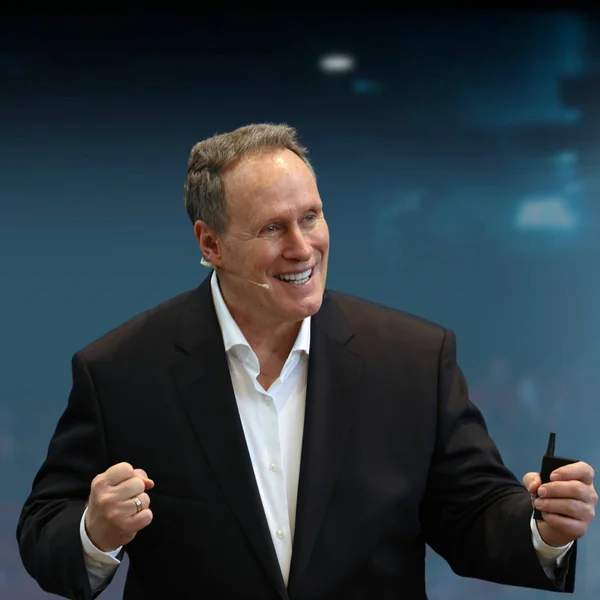
Stephen M.R. Covey is a bestselling author, speaker, and leadership expert known for his work on trust, ethics, and high performance. His book The Speed of Trust frames trust as a crucial economic driver rather than a soft skill, and its follow-up, Trust and Inspire, argues for trust-and-inspire leadership over the old command-and-control model. Both are Wall Street Journal bestsellers. He is the former CEO of the Covey Leadership Center, where he was instrumental in making his father's 7 Habits famous, and he now leads FranklinCovey's Global Speed of Trust Practice, which he co-founded. He is the son of Dr. Stephen R. Covey.
Covey describes the Covey children as the first guinea pigs for the principles that became The 7 Habits of Highly Effective People, taught one habit at a time before the book existed. He found his life's work when the Covey Leadership Center merged with Franklin Quest to form FranklinCovey, and two former arch competitors shared an office with little trust between them. Nothing moved until they built trust on purpose; then the company got more creative, more collaborative, faster, and cheaper. From that experience came the low-trust tax and the high-trust dividend, the Five Waves of Trust, and the thirteen high-trust behaviors, each phrased in two words, that he teaches today.
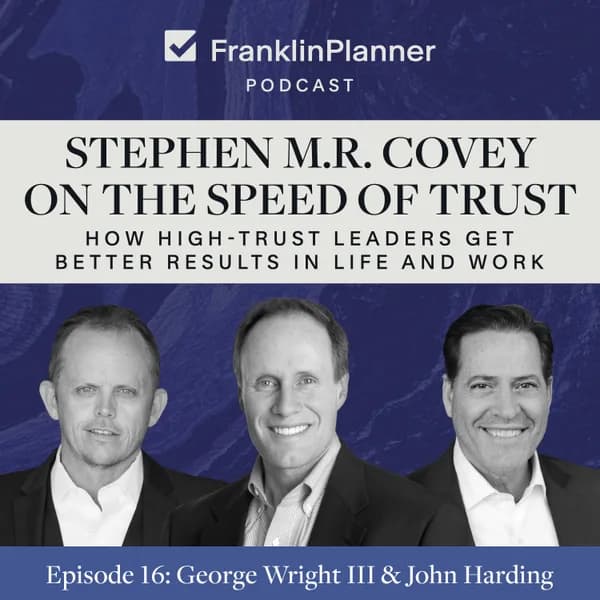
On The Franklin Planner Podcast, Covey joined host George Wright III for a conversation on how high-trust leaders get better results in life and work. He told the story of the rooftop where his father taught him to begin with the end in mind, explained why trust always affects speed and cost, and walked through the Five Waves from self-trust outward to society. He closed with the difference between smart trust and blind trust, the counterfeits that quietly erode credibility, and three daily actions anyone can start tomorrow.
Key ideas from Stephen’s conversation
Trust always impacts two outcomes: speed and cost.
When trust drops, everything takes longer and costs more, which Covey calls a low-trust tax. When trust rises, speed goes up and cost comes down, a high-trust dividend. The tax never appears as a line item; it hides in redundancy, bureaucracy, disengagement, turnover, and churn, like fish you cannot see until you put on polarized glasses.
Diagnose from the outside in, but change from the inside out.
Covey's Five Waves ripple from self-trust to relationship trust, team and organizational trust, marketplace trust, and societal trust. Waiting for society to change first means waiting forever. He cites a leader who modeled the behaviors on her own team until other teams asked what she was doing and the CEO rolled it out to 45,000 people.
Self-trust is built the same way as any other trust: make and keep commitments.
Keeping commitments is the number one trust-building behavior with other people, and the fastest way to build trust with yourself. Most of us over-promise and under-deliver to ourselves, starting with the 5 a.m. alarm. Covey points to Admiral McRaven's advice to make your bed: start with one small commitment, keep it at all costs, and repeat.
What destroys trust in good people is not the opposite of a behavior but its counterfeit.
Everyone knows lying destroys trust. The counterfeit of talking straight is spin: telling people what they want to hear, embellishing, sugarcoating. The counterfeit of practicing accountability is pointing the finger. Like counterfeit money, it looks real and may work for a while, but trust goes down. The behaviors are common sense, not common practice.
Not trusting is also a risk, and in a world where talent has options, probably the greater one.
Smart trust, not blind trust, blends the heart's propensity to trust with the head's analysis of the situation, the stakes, and the person's credibility. Pair extending trust with clarifying expectations and practicing accountability: build the agreement together, delegate outcomes rather than methods, and agree on how they will report back. Control shifts from hovering to the agreement.