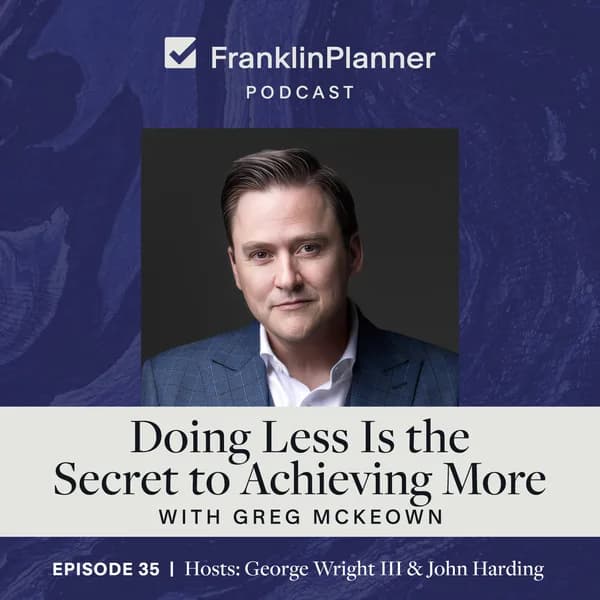
Greg McKeown
Author of Essentialism and Effortless, Speaker
Author of two New York Times bestsellers built on one premise: the problem was never that you aren't doing enough..
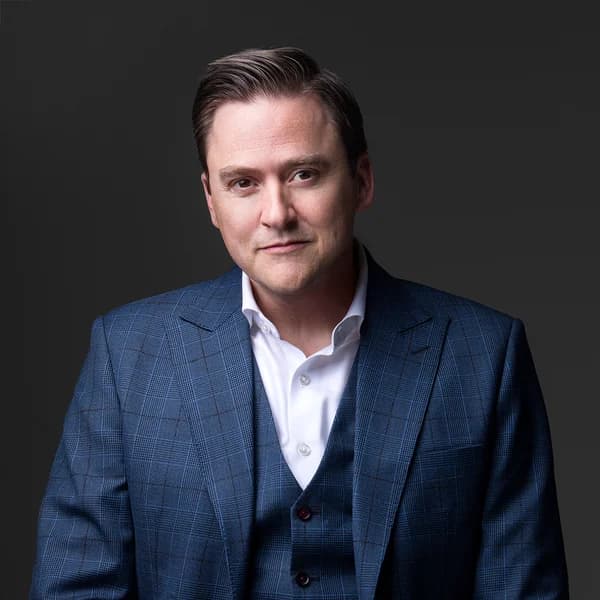
About Greg
Greg McKeown is the author of Essentialism: The Disciplined Pursuit of Less and Effortless: Make It Easier to Do What Matters Most. Together the two books have sold three million copies and been published in 40 languages. Goodreads voted Essentialism the number one leadership and success book to read in a lifetime. He has since released The Essentialism Planner, a 90-day guide to accomplishing more by doing less. He holds an MBA from Stanford's Graduate School of Business and a doctorate from the University of Cambridge, where his research focused on the skill he argues we need most right now.
McKeown has spoken to hundreds of organizations across more than 45 countries, for clients including Apple, Amazon, Google, Microsoft, Nike and the Navy SEALs. He hosts The Greg McKeown Podcast, with guests including Arthur Brooks, Matthew McConaughey, Maria Shriver, John Hope Bryant and Arianna Huffington. Students from over 100 countries take classes through his Essentialism Academy, and hundreds of thousands read his 1-Minute Wednesday newsletter. Earlier in his career he collaborated on the research and writing of Multipliers and assessed senior executives at Heidrick & Struggles. He is a Young Global Leader for the World Economic Forum.
On The Franklin Planner Podcast, McKeown joined George Wright III for an Author Spotlight conversation about why modern life feels less like distraction and more like seasickness. They traced the word noise back to nausea, took apart the assumptions baked into email and calendar apps, and walked through the 1990 Stanford tapper experiment that exposes how badly we overestimate being understood. It became a conversation about prioritization, confident misunderstanding, and the 85% rule — including the client meeting he attended hours after his daughter was born, and what that cost him.
Key ideas from Greg’s conversation
The problem is no longer distraction — it's disorientation.
McKeown argues the villain has changed since Essentialism was published. Noise traces back to nausea, and what people feel is seasickness: no answer to where am I, where do I want to be, how do I get there. Endless scrolling never asks those questions, so something outside technology has to.
Every technology inherits the assumptions it was built on.
Twenty years in, you still can't truly prioritize an inbox, because email was designed through the lens of productivity rather than prioritization. Calendars are built to set and forget. Intentional living requires the opposite — thinking about it on purpose.
If you don't prioritize your life, someone else will.
McKeown's daughter was born in the early hours of a Friday, and he still went to the client meeting with his laptop open, telling himself that if he could do it all he could have it all. He calls it a fool's bargain: something essential traded for something non-essential.
We are confident we're understood and almost never right.
In Elizabeth Newton's 1990 Stanford experiment, tappers predicted listeners would name the song half the time. The actual rate was 2.5% — three of 120 trials. That 20X gap is confident misunderstanding, and it blocks the shared clarity two people need to make trade-offs together.
Spend no more than 85% today so you can go again tomorrow.
The Norwegian South Pole team walked 15 miles a day, never more, and arrived over 20 days ahead with enough left to survive the return. The British sprinted on good days and collapsed on bad ones. Nobody can work ten times harder, so the leverage is a different lens, not more effort.